What I write about
The Boardroom
My work on the decisions Boards must own, the judgement they must exercise, and the accountability they cannot delegate.
My take
The Boards I meet are rarely short of information. What is harder to see is whether a decision has reached them while it is still open, or after the framing, the options, and the preferred answer have already been settled elsewhere. That is where most of my work here starts: with the conditions directors need to exercise judgement rather than ratify a conclusion.
I don’t think directors need to become technologists to govern technology well. They do need enough capability to test the case management presents, distinguish evidence from confidence, and know when agency has moved without accountability moving with it. That work reaches the whole Board: the chair protecting collective accountability, the company secretary preserving the conditions for judgement, and every director bringing a view they have formed for themselves.
The question I keep coming back to is whether the Board and the people transforming the work are looking at the same picture. My Remake framework is where I connect agency for the work with accountability for the change, from the decision to begin through to the outcome the Board must stand behind. The work gathered here follows that boundary across director capability, Board information, strategy, risk, and accountability.
Latest writing (92)
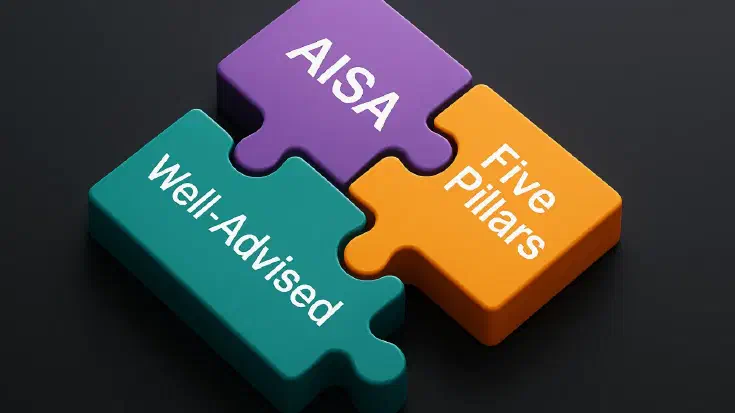
A Complete AI Adoption Framework: AISA, Five Pillars, and Well-Advised
The AI Stages of Adoption, the Five Pillars, and Well-Advised are one framework: how they integrate to govern multi-speed AI adoption across the organisation.
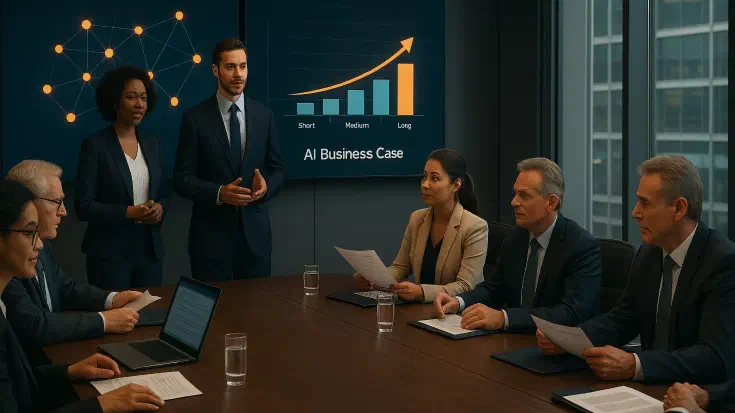
Rethinking Business Cases in the Age of AI: and Securing Buy-In from the Board
A well-built AI business case can still fail at the Board. When 88% of pilots never reach production, approval must carry a path to scale.
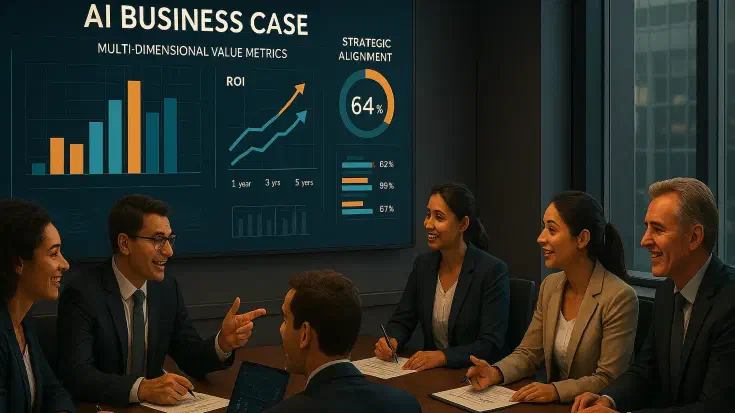
Rethinking Business Cases in the Age of AI: Building Your AI Business Case
A disciplined AI business case balances financial rigour with AI's unusual value patterns: the step-by-step construction, from opportunity to a case a Board can sign.
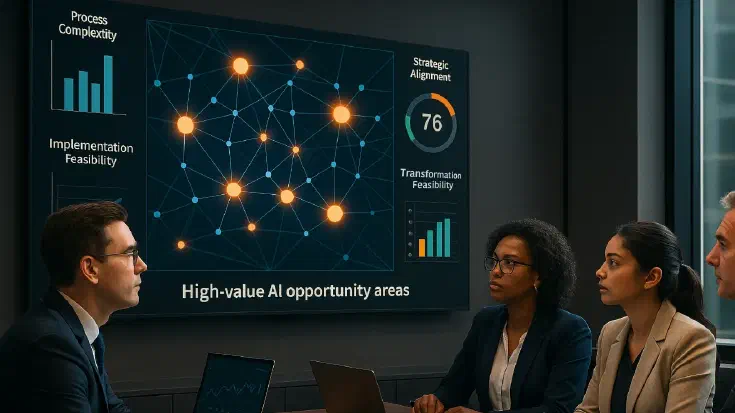
Rethinking Business Cases in the Age of AI: Finding High-Value AI Opportunities
The highest-value AI opportunities rarely sit in the fashionable applications. They sit in the invisible, strategically significant processes a structured evaluation surfaces.

Rethinking Business Cases in the Age of AI: Creating the Foundation
AI's parallel, multi-speed adoption breaks the sequential logic of traditional business cases. These are the building blocks an evaluation needs before any number is written.

Rethinking Business Cases in the Age of AI: What Boards Need to Know
Traditional business case methods assume sequential adoption. AI runs in parallel across maturity stages at once, and the valuation has to change with it.

Upskilling for the AI Era: Building a Future-Ready Workforce
The scramble for AI talent repeats the early cloud years, and the answer is the same: upskill the people already there instead of chasing hires.

Implementing Decision Analytics: A Practical Guide for Boards
Decision analytics at Board level works when staged: a parallel input before a replacement, human judgement in the loop while the record builds.

Transforming the Board: Using Decision Analytics for Strategic Advantage
Decision analytics moves the Board from backward-looking metrics to predictive indicators that model possible futures, and changes how directors exercise judgement.

Navigating the AI Regulatory Maze: A Boardroom Survival Guide
The EU AI Act is in force, with fines up to €35 million or 7% of turnover. Boards must comply without losing speed.

From Shadow AI to Strategic Asset: Building Your AI Centre of Excellence
Shadow AI is already inside the organisation. A structured AI Centre of Excellence turns it from unmanaged risk into a strategic asset Boards can govern.

Increasing AI Maturity: Navigating the AI Stages of Adoption with the Five Pillars
Readiness for the next AI stage is a Five Pillars question, not a calendar one: a function advances only when every pillar reaches the threshold.
No articles match that filter. Clear the filter.
The ideas that underpin my writing
Ideas I’ve named and matured writing about Board: what each one means, and where it started.
Accountability Gap
When an organisation delegates work to AI without building the capability to verify it, leaving people answerable for outputs no one has actually checked. For a Board, no delegation to AI should be approved without also approving who checks the output and how, because accountability without a verification step is accountability in name only.
Adaptive Localisation
A strategy of running different AI approaches in different markets, tuned to each market's regulatory, cultural, or competitive conditions, deliberately trading consistency for regional advantage. For a Board, choosing this stance means accepting real complexity costs and being ready to answer why the organisation treats one market's rules differently to another's.
AI Capability Bifurcation
The split between workers who build genuine capability to verify and apply judgement to AI outputs, who command a premium, and those who merely accumulate credentials or tool exposure, who face an earnings penalty. For a Board, the same divide runs through the boardroom itself: familiarity with AI tools is not the same as the capability to challenge what the organisation actually does with them.
Board Briefings
For directors who want to go deeper, my Board Briefings bring the related writing, evidence, and practical questions together in one place.




The Board in the Machine
Signals
My early reads on technologies and ideas that are starting to reach the Board agenda, while the picture is still forming.
Agentic AI
Generative models are being given goals, tools, and the authority to act. The Board question is where to transfer agency, and under what limits.
Automated Reasoning
Formal logic and mathematical proof, industrialised. For some precisely specified, high-consequence controls, testing is no longer the strongest assurance available.
Embodied AI
AI that acts in the physical world, from factory humanoids to autonomous machines. The liability, capital, and workforce questions are already Board-level.
Remake
The models, diagnostics, methodologies, and principles from the Remake Library that I use when working through Board judgement, director capability, and the line between agency and accountability.
- Principle Minimum Lovable Governance Governance embedded in how work happens: proportionate to risk, continuous rather than episodic, and used because it works.
- Model Six Board Concerns An interconnected lens of six concerns, Strategic Alignment, Ethical and Legal Responsibility, Financial and Operational Impact, Risk Management, Stakeholder Confidence and Safeguarding Innovation, that must be orchestrated together so AI discussion does not collapse into risk management alone.
Questions Boards ask about The Boardroom
Can I evaluate what I am being asked to oversee?
It asks whether your oversight is real or nominal. A credible yes means you can test management’s claim of strong AI governance with a question of your own, distinguish well-governed AI from well-presented AI, and recognise a deployment drifting from its specification. If any answer is no, the development priority is clear: oversight without the capacity to evaluate is oversight in name only.
Is my view genuinely mine?
It asks where your position on AI was formed. If it is constructed entirely from management briefings you cannot interrogate, it is endorsement rather than judgement. A credible yes rests on independent information: your own resources and sources of insight on AI, per the IoD’s Recommendation 10, and knowing the strategy has changed materially before a journalist asks.
Are the assurances the organisation provides its Board based on probability, or proof?
Board assurance often rests on testing, sampling, and statistical confidence. The useful test is whether an assurance covers the complete, formally specified population or only the cases examined. Where a Board-approved constraint has been encoded and exhaustively verified, the answer is proof. Elsewhere it remains probability, however polished the presentation.
How many of our decisions are truly human, and how many are AI with sign-off?
The question probes the migration I call the change in decision architecture: nominal authority stays with people while the cognitive content of the decision shifts to the machine. Deloitte’s data shows 60% of executives now regularly use AI to support decisions while only 5% of organisations rate themselves mature in governing them, so most Boards cannot currently answer this with precision. A credible answer names the decision classes where AI recommendations dominate, and shows that accountability structures were redesigned when the decision substance moved.
What happens when nobody is accountable?
The work does not start. A remaking proceeds only where there are people with the skills and authority to do the work and accountability for the change that reaches the Board, and the gate tests both together. Accountability cannot be handed to a project team and still mean anything: a sponsor who fades after kickoff is not accountability, and a Board that is briefed but not answerable is not oversight. A change with no one truly answerable fails often enough that the framework refuses to start one.